Showing posts with label article. Show all posts

Art Directors vs Designers

Not that I'm suggesting you face off in a Photoshop cage fight or anything - don't mean to be misleading with that title. (Though that would be awesome.)

Are you a designer? Or an art director? There's a difference. And knowing the difference will help your overall job satisfaction. (Kinda like how I did an account management internship one year and learned that I'm good at it. but absolutely hate it.)

This post is important for writers too. It will help you understand who you're working with and how to best work with them.

Enjoy this lengthy, but super helpful post. I even learned a little something too. (That's my one thing for today so no more learning until tomorrow. Woohoo)

A REPOST OF INTEREST TO GRAPHIC DESIGNERS, ART DIRECTORS AND STUDENTS OF ADVERTISING IN GENERAL

from Adteachings

Our first order of business is to try to figure out what the differences and similarities are between visual advertising and graphic design.

When I first got into advertising, my colleagues and I had the very snobbish and very wrong idea that advertising was better than graphic design, that it had better ideas, that graphic designers were just around to make things look pretty, that the more strongly conceptual work was done by ad people. If you had asked us to draw a Venn diagram of the two disciplines back then, it would have looked like this:
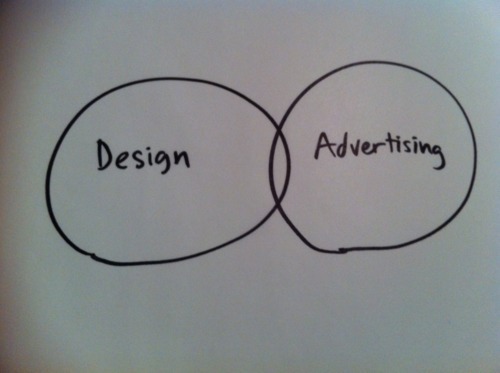
image

We would have said that designers were all about peripheral marketing materials, annual reports, shopping bags, things of that nature. We would have insisted that advertising was about important things! Double-page spreads! Television commercials!

Many designers were rightfully insulted by this kind of thinking – including one very famous one.

image

Jonathan Ive is the Senior Vice-President in charge of design at Apple Computer, responsible for the groundbreaking design of the iPhone, various iPods, the Macbook Air, the iMac– the list goes on and on. The interesting thing, though, is that Jonathan Ive almost resigned from Apple before any of those products saw the light of day. And the reason he almost resigned was that for the longest time, he wasn’t permitted to do the job of a designer the way he understood it. Apple’s hardware engineers would bring him the box of wires and circuit boards and say, “Here. We need you to design a nice-looking case for this.” But as a designer, Ive knew that his work needed to start well before then – right back to when the product was first conceived. Eventually, he got Steve Jobs to understand it, too.
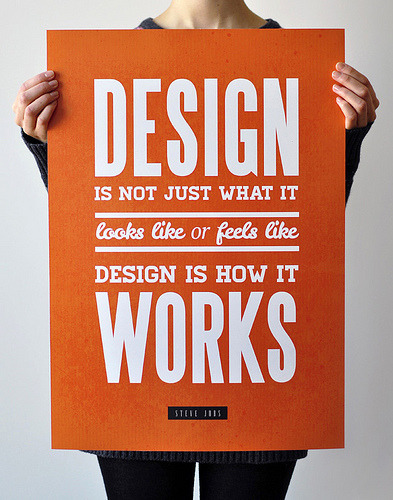
image

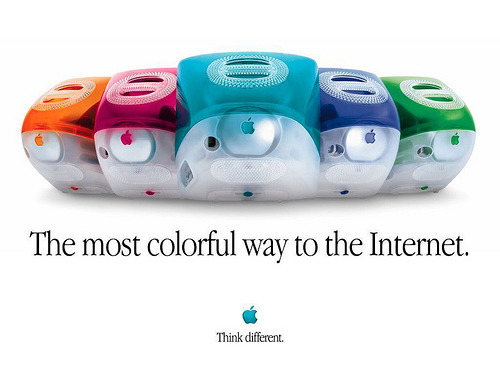
To persuade Ive to stay, Jobs agreed to give him meaningful input to his products from the earliest stages. With this new influence, Ive helped to create the first iMac computers in 1998…
image
…which launched Apple on its way to where it is today – the most valuable and admired brand on the planet.

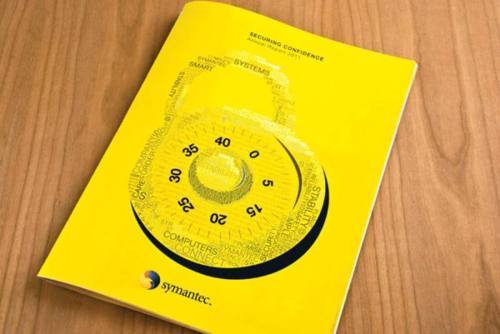
There is a difference between the disciplines of graphic design and advertising, but there is also a great deal of overlap. Here’s something to look at.
image

Although this is obviously an example of graphic design, I don’t think you would describe it as an ad. Now, let’s look at something else:
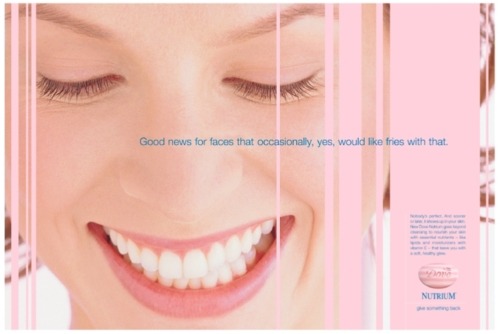
image

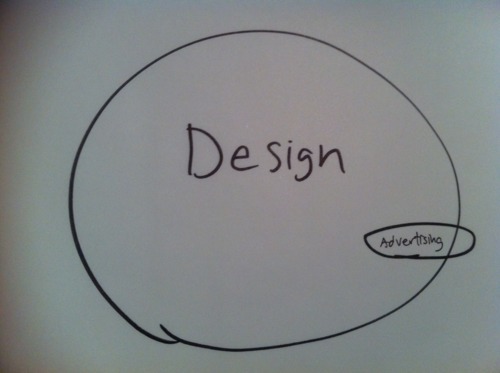
Would you describe it as an example of advertising? Of course you would. But you would also have to describe it as an example of graphic design. So, while it’s clear that not all graphic design is advertising, it is equally clear that almost all advertising does involve design – even radio commercials, because the sound effects and music placed behind the announcer’s voice are referred to as “sound design.” Thus, the appropriate Venn diagram to describe the relationship between advertising and design actually looks like this:
image

(I’ve allowed advertising to spill out of design a bit because of the possibility that a stunt – or something – might require no design at all.)

So, advertising is just one small part of a much larger universe called design. But what makes advertising its own little dot inside that diagram? What sets it apart? Let’s look at the next slide and see if we can find an answer.

image

What’s going on here? We see there’s an arrangement of typography and illustration here, so we know there was graphic design involved. But what is the concept? Well, we’re looking at an architect’s blueprint for a house, but the weird thing is that the family’s vehicle is included as if it were really part of the floor plan. So the concept, or the point they’re trying to make, is pretty clear here. They’re telling us that a family’s car is an extension of their home. Some families practically live in their cars, so I think this is a sentiment we can all recognize and get behind. But for all that, I don’t think this is an ad. Not yet, anyway. Now, I’m going to show you this piece of design again, but this time with an important difference.
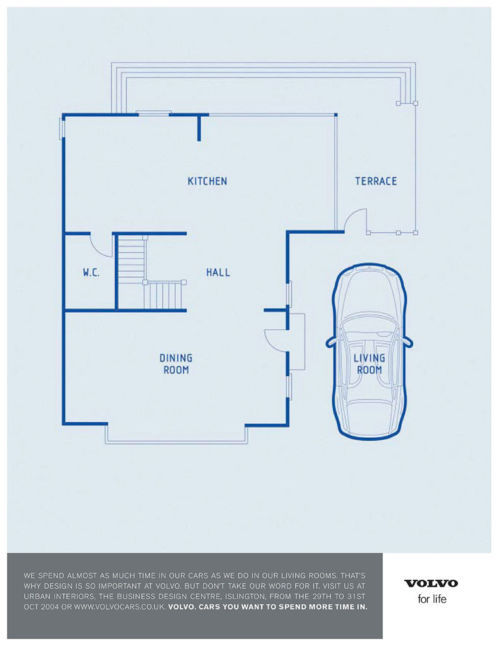
image

What has been added here is a sign-off identifying Volvo as the source of this design thought. There’s also copy expressing how Volvo understands that a car is effectively a second living room, and that the company takes design very seriously for that reason. I think we can all now agree that this is most certainly an ad. So what were the differences between this ad and the previous slide? Well, we’re now seeing that the interesting design concept is being presented for the benefit of a particular product.

We’re also seeing that there’s an explicit call to action – the reader is being invited to see a Volvo design exhibition. There’s also an implied call to action – buy Volvo cars. So, for the purposes of today’s talk, I’m going to define advertising as follows:
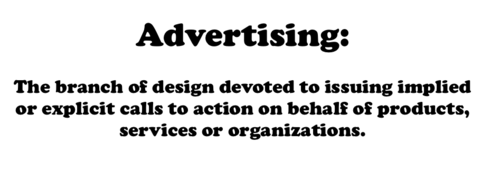
image
Typically, the call to action is “buy this product” or “try our service.” But sometimes ads ask for political action or charitable donations, so our definition needs to be flexible enough to accommodate this possibility.

There is far more respect for design today than there was when my career began. I think the brilliance of Apple’s success is part of the reason for that. It has made us aware that design is central to every manmade product, process and activity. The design might be brilliant or mediocre or downright terrible, but the design is there nonetheless. The limitation of advertising is that it generally has no opinion on products or practices until it’s time to write the creative brief. Practically speaking, ad agencies don’t get involved until a product is well on its way to being in stores.

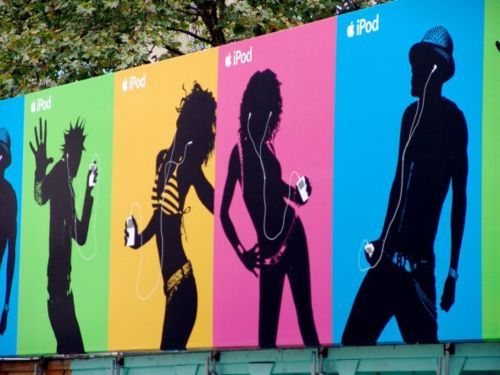
By contrast, designers (be they product designers or graphic designers) have the potential to improve products or processes from the moment of their conception. Good design makes itself felt in all our interactions with a brand. You might recall the launch campaign for the iPod, a campaign in which the posters looked pretty much like screen grabs from the TV spot.
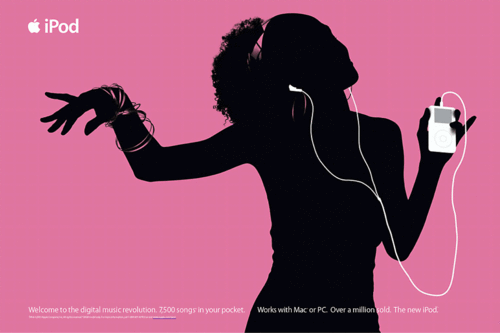
image
image

It’s interesting that the launch commercial looked more like a piece of design than an ad. It was all graphics and sound with no explicit sales message, but it sold hard nonetheless. It was a wonderful piece of design because it felt like the product it was selling. It was cool, thrilling, simple and human. In recent years, ad agencies have trumpeted their ability to make brands consistent and recognizable at every point of communication the way Apple has, but good designers have always known the importance of this.

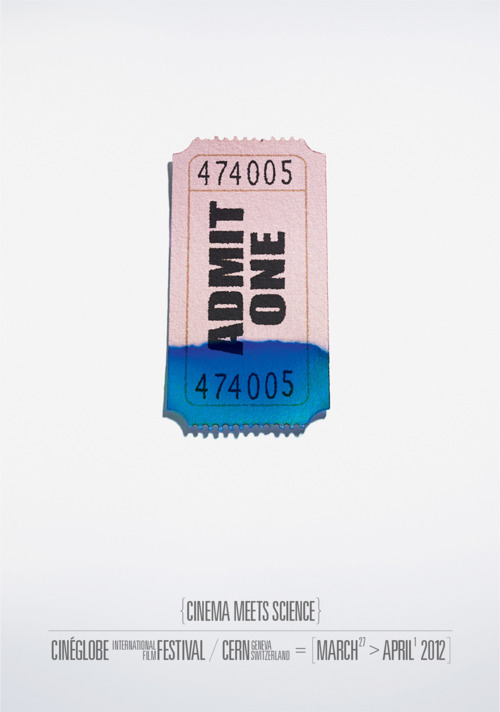
Another reason design is getting more respect these days is that more and more ads draw their thinking from the grand tradition of poster design. When my career began, the concept of most ads was found in the headline. But for the past decade or so, ad concepts have been visually driven. Today, many advertising concepts are virtually indistinguishable from the design concepts that appear on event posters. Here’s an example.
image

Here, we’re seeing a mash-up of the visual language of movie theatres and the visual language of the chemistry lab, all in service of promoting a scientific film festival. The thinking here is pure graphic design, but it’s coming from an advertising agency – the very respected Legas Delaney of London.
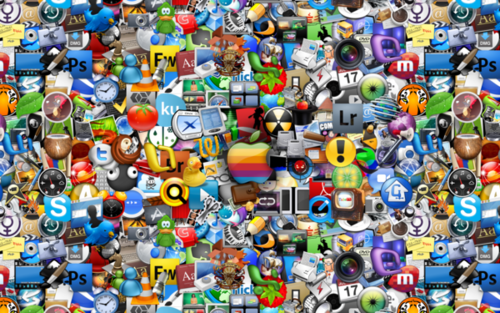
But the most important reason design is getting more respect these days is the relatively new and still-scary blank page known as the Internet. This is a blank page that is communicating across cultures and languages, and because of that, icons and images are supremely important, as are the ways in which users interact with them.
image

Clearly, to manage this new frontier, it’s the designer’s training you want on board more than the advertising art director’s.

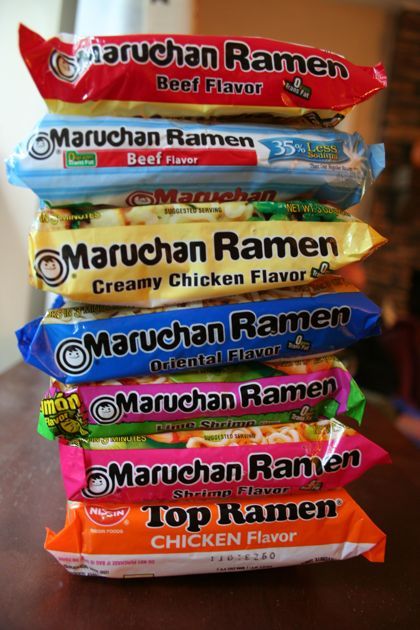
So now we know that if you decide to be an advertising art director, your design concepts will be dedicated to selling products or services or ideas. That’s okay on a theoretical level, but you probably want to know about the practical differences your decision will make. Okay, so here goes. The first big difference is in your earning potential. Your pay in your first job will probably be terrible whichever path you choose.

image

However, the potential salary for an art director is way higher.

image
If you are an award-winning art director, you could be earning six figures in just a few years. Most designers don’t earn that much that quickly. Money should never be your only reason for doing anything, but if salary potential is an issue for you, you’ll want to consider a career in advertising.
However, there is definitely a price to be paid for that higher potential salary, and that is in the relative volatility of the two industries. Simply put, jobs in graphic design are way more secure than jobs in advertising. The reasons have to do with the business model of a design firm versus an advertising agency.

Design firms are usually hired by the project – an annual report, a corporate identity, a package design and so forth. A design firm might therefore have dozens of clients, and losing one or two clients is no big deal. At busy design firms, layoffs don’t happen all that often, unless the entire economy is suffering. By contrast, advertising agencies don’t spend a lot of time doing project work.

They need to rely on substantial monthly retainers paid by a smaller number of clients. So, if one large client cuts its spending or fires the agency, the agency’s revenue can drop so sharply that jobs have to be cut, and one of those jobs might be yours, even if you’ve been doing a good job.

image

If you stay in advertising long enough, this is almost certain to happen to you sooner or later. So, if you’re the sort of person who places a lot of value on a secure job, you will probably be happier in a design firm than in an ad agency.

Another important difference between design and advertising is how concepts get generated – how your work gets done. As graphic designers, you will typically work alone. You’ll get the brief, go to work on some ideas, and if you’re awaiting copy from the client or from a writer, you’ll just flow in Greek copy as a placeholder. You might not ever meet or speak to the person who’s writing your copy. If it’s an annual report, you’ll get your copy emailed to you, and if you don’t have any questions, that’ll be it.

Good advertising agencies work differently. Typically, creative people in agencies work in teams. In an ad agency, an art director is paired with a writer in what is pretty much a full-time partnership. You take the brief together, and you work on it together, batting ideas back and forth. And there’s a lot of overlap in your roles. You might suggest a headline thought to your writer, and your writer might suggest a certain illustration style to you. All things being equal, a happy creative team can produce a lot more cool ideas than someone working solo. And, indeed, some amazing careers have been built on this sort of teamwork. But creative partnerships are like marriages. When they work, they’re awesome, but if they’re not working, they can be a source of pure misery. So if you’re interested in being an advertising art director, remember that you’re going to be spending a lot of hours trusting in and relying on your writer. If you enjoy jamming with people, you will probably do just fine. But if you prefer disappearing into your own head when you work, you might be happier working solo as a designer.

Now would be a good time to talk about the history of advertising, because that, too, might affect your decision. Fifty years ago, ad agencies actually worked more like design firms. Writers and art directors were in separate departments. The art director would wait until the copywriter came down the hall with his copy sheet. Only then would the art director start thinking about how to handle things visually. But all this changed in the early 1960s because of what is known in advertising as The Creative Revolution. It was hugely important to our business, and it all started because of one man.
image

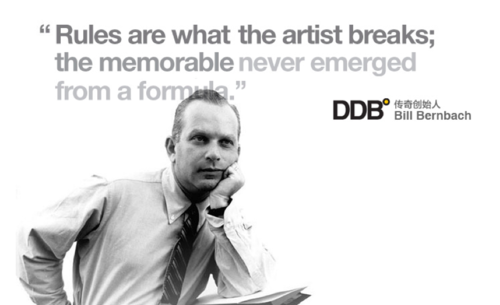
This is the late Bill Bernbach. He is still viewed today as the single most important figure in the history of advertising. Bill Bernbach was one of the founding partners of the New York agency Doyle Dane Bernbach, which is today known globally as DDB.

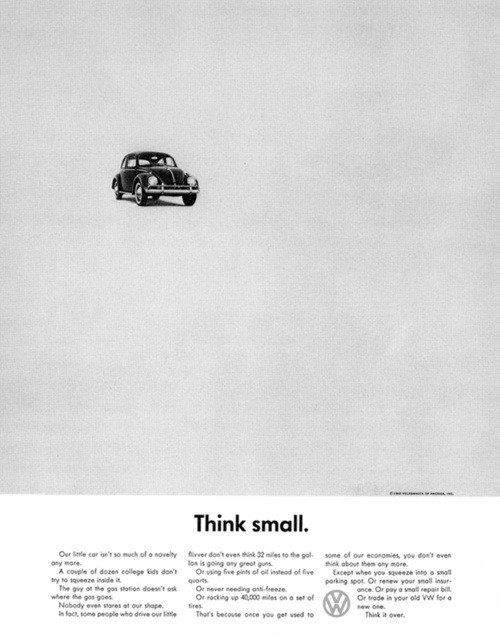
When Bernbach started his agency, he made some radical changes in how advertising got made. Every other ad agency had writers and art directors working separately; Bernbach got them working in teams. Every other ad agency hired blond-haired white boys who had graduated from private schools; Bernbach hired people from working-class immigrant families: Jews, Italians, Germans – even women. Bernbach had a core philosophy about advertising, and it’s a philosophy that still dominates today. It is the philosophy that advertising doesn’t work at persuading people unless it reaches people emotionally. And to reach people emotionally, you have to say things that are insightful and true to the human condition. The most famous work Doyle Dane Bernbach did was for Volkswagen, and the single most famous ad they ever did for Volkswagen was this one.
image

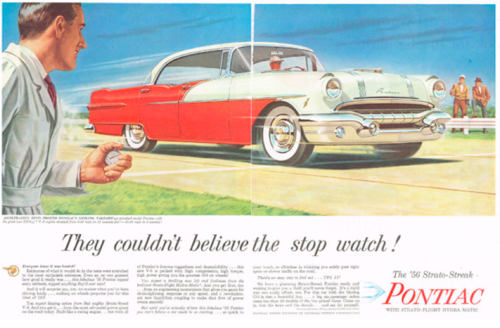
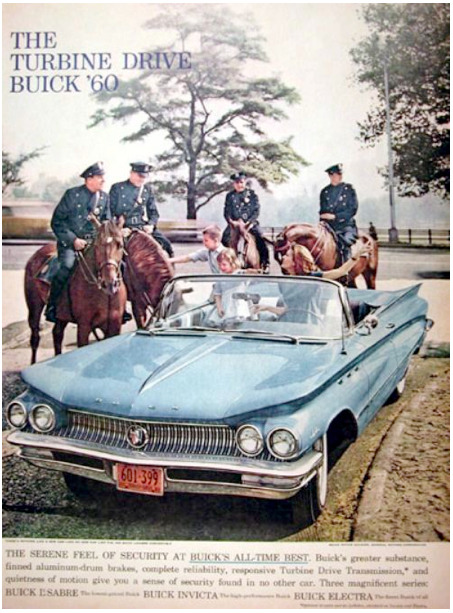
Now, you’re probably thinking, “What’s so special about that ad? I’ve seen lots of ads that look something like that. What’s the big deal?” Well, the fact that you’ve seen lots of ads that look like this is a reflection of how important this ad still is, fifty years later. To understand how arresting this ad was when it first appeared, you have to look at other car ads of that era.
image
image
image
image

The first thing you’ll notice is how over-the-top the scenarios are. For one thing, people are depicted as being absurdly happy just because they’re near a car, for goodness’ sake. Also, these ads present fantasies as if they were reality. Most people don’t belong to country clubs or go yachting, but before DDB, advertising would present such scenarios as if they were fact.

So, the “Think Small” ad was arresting for the modesty and simplicity of its art direction. But the writing would also have caused a bit of a head snap back then. The years following the Second World War were a time of explosive growth and progress in America. People were earning more and more money to buy ever bigger homes and cars. Back then, people would say, “You’ve got to think big!” absolutely without irony. So, the exhortation here to “Think small” would have been almost shocking, and it would have pretty much guaranteed that the ad got read.

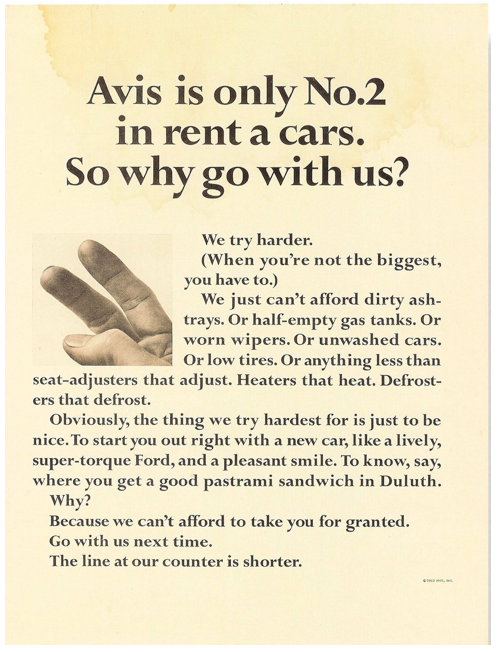
Let’s look at another famous ad from Doyle Dane Bernbach. This was an ad they did for Avis Rent-A-Car.
image

Again, there is nothing shocking about this ad if you view it through modern eyes. But remember, this was done in an era when people bragged about being number one. Back then, America was Number One. Nobody would have proudly announced that they were an also-ran. So, by proclaiming their Number Two status, Avis got people’s attention, and they rewarded it by stating some very human truths. We all know that people who aren’t leaders have to try harder; Doyle Dane Bernbach was the first agency to turn that kind of human truth into a persuasive selling message.
So we now know that advertising attempts to deliver emotionally provocative messages to people. What I can tell you is that your success as an advertising art director will largely depend on your ability to present ideas as freshly and as interestingly as Volkswagen and Avis’ messages were presented back in the day.

That ability will depend on your ability to think in terms of advertising concept versus design concept. If it’s true that form follows function, then we need to think about the function of graphic design versus the function of advertising. Typically, the function of graphic design is to present communication in a way that is clear, interesting, accessible and appropriate. You already know more about this than you think. You already know that this is an appropriate wordmark for a funeral home…
image
While this is not…
image

Advertising concepts share this burden with design concepts, but they have a further duty. They must provoke action, something that graphic design isn’t always required to do.

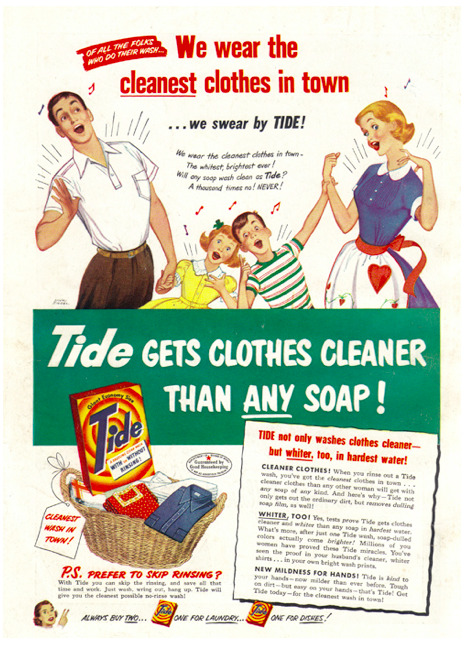
To provoke action, the best ad people understand that they must target people’s emotions. But mere information isn’t typically very emotionally provocative. If I tell you that Tide gets clothes clean, you probably won’t be inspired to run out and buy Tide. That is because information is not communication, at least not in advertising terms.

So, good ad people work to reconfigure or reinterpret information so that it becomes more persuasive. They seek to give information a kind of personality or attitude that makes it more interesting and convincing. I just mentioned a truth that everybody knows, that Tide gets clothes clean. Back in the 1950s, advertisers felt they were doing their jobs just by illustrating that information.
image

How can we turn this boring information into interesting advertising? Here’s an approach that won a ton of awards for Saatchi a while ago:

image

Here, they’ve shown the fight against stains as a literal battle, and because of Tide, stains don’t stand a chance.

Let’s look at another example. We’ve all heard of date rape, and we all know the importance of keeping an eye on your drink when you’re out partying. Here’s a website that provides information about that topic.

image

I think we can all agree that this is not a successful piece of graphic design. Whoever put this together was obviously well intentioned, but it’s just a whole bunch of default font type on page that’s never been touched by a designer.  We can agree also that this is not a successful piece of advertising, either, because all it does is repeat familiar information. There is, unfortunately, nothing here that would make people think seriously about how to protect themselves when they’re out clubbing. But a London ad agency helped these people out with an ambient idea that looked like this.
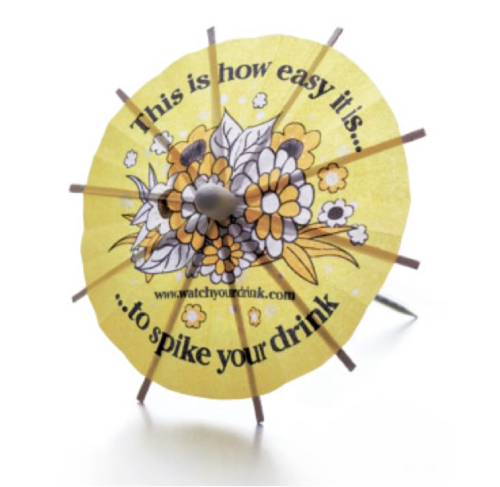
image

A team of people went out to clubs and popped these little umbrellas in women’s drinks when their backs were turned. Suddenly, people were confronted with the stark emotional reality that they weren’t as good at protecting themselves as they thought they were. Suddenly, mere information was delivered in a way that grabbed people’s emotions and made them think about their behavior and how they might change it. So, if you’re interested in becoming an advertising art director, ask yourself if you feel able to come up with the kinds of ideas that turn mere information into arresting communication.

It may be that some of you are thinking, yeah, wow, I want to get into advertising. What should I do? Well, the good news is that you can and should keep on doing exactly what you’re doing. To understand good design principles, photography, typography, print production – all these things are vitally important to your success as an advertising art director, and I can tell you that advertising programs don’t teach these skills nearly as well as design programs do. So you’re in the right place, but you’ll need to do some extra work to prepare for your start in advertising, and that extra work will be on your advertising portfolio. Your advertising portfolio should not, ideally, contain design pieces.
For your advertising portfolio, you need to start creating ads. Grab images off the Internet or do your own quick photography and start creating ads. The best place to start is with print ads, because they give you your best odds of making a good impression quickly in the context of a portfolio. To inspire yourself, go looking for an ad that’s really bad. You won’t have to look long to find one. When you see that bad ad, you’ll probably be able to glean from it what the brief would have been – that is, what the advertiser was trying to communicate.

But if you don’t feel able to work without a formal brief, I can help you there. If you go to the adteachings account on Scribd.com, you’ll see that I’ve posted a bunch of clear, straightforward briefs for several brands: California Sandwiches, Swiffer, the Royal Conservatory of Music, Jolt Cola and M and M Meat Shops.

A word of caution: Your first portfolio will not be done quickly. You’ll get started and think, “Wow, this is going well. I’m going to be done in a couple of weeks!”

image
No, you aren’t. If you spend an hour a day on it, your first presentable portfolio will easily be a year away. Good portfolios are the result of endless revision, refinement and editing. You will know you’re making progress when you realize that you’re discarding way more ads than you’re including. And please be aware that your portfolio will actually never be finished. I’ve seen advertising students and juniors hang on to the same lousy ads for years and years, and since their portfolios stay in the same crummy place, so do their careers.

If you’re looking for more inspiration, I would direct you to the Internet, where there are all kinds of amazing websites devoted to advertising. One of those is mine.
image

Another one is AdsOfTheWorld.com, which receives and posts pretty much every good ad that gets published or broadcast anywhere in the world.

Read this: How to steal like an artist

There are no new ideas. 
There are new ways of merging ideas and of presenting ideas. 
Part of being creative is taking two or more "old" things and making something different. 

That's why life experience, culture and exposure are so important in advertising. Just as important or maybe even more important than education and intellect. (Education is what you learn, intellect is how you think) 
 
Creative people are those people who take every part of themselves and their world and melds them together to make something new. 
 
I've posted before - Steal Inspiration, Not Ideas and below is a great article based on the book, How to Steal Like an Artist that I think has great insights to help you become a better creative. 

How to Steal Like an Artist and Other Tips On Creativity

By
Associate Editor

How to Steal Like an Artist and Other Tips On CreativityStealing is not a crime — at least when you’re stealing ideas from a variety of artists. That’s the basis of Austin Kleon’s book Steal Like An Artist: 10 Things Nobody Told You About Being Creative. (A premise that he, of course, stole from other artists.)
In the book, Kleon shares unique insights on cultivating creativity.
Specifically, he presents the below 10 tips, which he created for a talk at a community college. They represent the things he wished he would’ve known when starting out.

  • Steal like an artist.
  • Don’t wait until you know who you are to get started.
  • Write the book you want to read.
  • Use your hands.
  • Side projects and hobbies are important.
  • The secret: do good work and share it with people.
  • Geography is no longer our master.
  • Be nice. (The world is a small town.)
  • Be boring. (It’s the only way to get work done.)
  • Creativity is subtraction.
In the first chapter, Kleon quotes T.S. Eliot on stealing like a true artist:
Immature poets imitate; mature poets steal; bad poets deface what they take, and good poets make it into something better, or at least something different. The good poet welds his theft into a whole of feeling which is unique, utterly different from which it was torn.
As Kleon explains, nothing is absolutely original, because artists build on the work that came before them. This very idea is liberating, he says. It lets you “stop trying to make something out of nothing,” and instead accept the influence of others. That’s why it’s important to gather and surround yourself with good ideas. “The more good ideas you collect, the more you can choose from to be influenced by.”
Steal Like an Artist is filled with inspiration. (My copy is drenched in black marker and highlighter.) These are just a few of the tips I’m stealing from the book.

1. Instead of studying an entire discipline, “chew on one thinker — writer, artist, activist, role model — you really love.” Learning everything about a particular discipline is overwhelming. That’s why Kleon suggests picking one person and learning everything you can about them. Then he instructs readers to find three people that person loved and learn everything you can about them. When you’re done, just keep repeating the process.
By doing this, Kleon says that you’re building a family tree, “a creative lineage,” which will remind you that, as you’re creating, you’re not alone. Kleon keeps pictures of his favorite artists in his studio. “I can almost feel them pushing me forward as I’m hunched over my desk,” he writes.

2. Figure out how these thinkers see the world. According to Kleon, “You don’t want to look like your heroes, you want to see like your heroes.” In other words, you want to understand and internalize how they view the world. He makes another great point: “If you just mimic the surface of somebody’s work without understanding where they are coming from, your work will never be anything more than a knockoff.”

3. Have separate workspaces. I think it’s safe to say that most of us are attached to technology. For instance, I’m on my computer — on and off but mostly on — throughout the day. We barely leave each other’s sides.
But this isn’t so good for brainstorming or creating. When we’re creating, we also need to move our bodies, according to Kleon. He did just that with his first book Newspaper Blackout. His tools were a newspaper article and a permanent marker. He writes:
The process engaged most of my senses: the feel of newsprint in my hands, the sight of words disappearing under my lines, the faint squeak of the marker tip, the smell of the marker fumes—there was a kind of magic happening. When I was making the poems, it didn’t feel like work. It felt like play.
Kleon has two workspaces: one for his computer — which he calls his digital desk — and the other purely for hands-on creating, which is his analog station. He suggests readers check out the school supply aisle of their local store and spend $10 on paper, pens and sticky notes. He writes:
When you get back home to your analog station, pretend it’s craft time. Scribble on paper, cut it up, and tape the pieces back together. Stand up while you’re working. Pin things on the walls and look for patterns. Spread things around your space and sort through them.
4. Pursue all your passions. Kleon says that you don’t have to pick one passion and discard the rest. He quotes playwright Steven Tomlinson, who said about various passions: “Let them talk to each other. Something will begin to happen.”
In addition to writing and drawing, Kleon also plays in a band. His music, he says, doesn’t interfere with his writing; rather, it’s added to and improved it. I especially love his concluding point about passion:
Don’t throw any of yourself away. Don’t worry about a grand scheme or unified vision for your work. Don’t worry about unity — what unifies your work is the fact that you made it. One day, you’ll look back and it will all make sense.

Check out Austin Kleon’s website to learn more about his interesting work. By the way, I first learned about Kleon’s book from Maria Popova’s fascinating blog, Brain Pickings. You can watch one of Kleon’s talks at Popova’s blog.

Back2Work: Small Talking Tips

One of my goals here is to be honest and direct with you at all times. Lying, coddling and misleading you won't get you anywhere in life. And puts me on a one-way, nonstop train to Hell. (aka front row at The View.) So let me get this out of the way before I go any further into this post. I hate small talk.

I hate it.

Most people are boring and/or poor conversationalists and I'd rather not force banter and waste my wit on them. And yes, you may be my best friend's boyfriend or the CEO of my company, but if I try and find we genuinely have nothing to talk about or you can't grasp the basic dynamics of a dialogue then I quit.

Then there are those people, people I admire in this realm, who are able to push past the awkward silence, the short responses and paragraphs about laundry, weather systems or teething. (Situations in which I usually find myself trying to come up with ways to frame other people for my suicide, you know, just to keep NYPD busy.)

Making small talk is a skill. And a valuable asset to have as a creative. Don't get me wrong, I'm a social butterfly. I've had conversations with homeless men and head honchos, however, I can't force it or fake it. If I'm not interested, I'm just not interested (why do people always want to talk when I've got my headphones in and it's before 9 AM. What do we have to talk about before 9 AM?) And if you're not interesting, I probably hate you.

You, my precious grasshoppers, should master small talk. Advertising is full of the most random group of attention seeking, socially awkward triviaphiles out there. (Is there a word for people who know a lot of random trivia? I made up triviaphiles.)

You should be able to own an elevator and make a client see your personality. (These are the two main times it matters: When you're stuck on the elevator with your boss's boss or before or after a client meeting, at a client dinner, on a shoot or out at a networking event.)

Here are some tips I gathered (aka copied and pasted) from these articles for us (I definitely need to learn) to get better at making small talk:

10 tips for making small talk


1. As you prepare for a function, come up with three things to talk about as well as four generic questions that will get others talking. If you've met the host before, try to remember things about her, such as her passion for a sport or a charity you're both involved in.

2. Be the first to say "Hello." If you're not sure the other person will remember you, offer your name to ease the pressure. For example, "Charles Bartlett? Lynn Schmidt -- good to see you again." Smile first and always shake hands when you meet someone.

3. Pay attention to what they're saying. When you're making small talk, follow up on phrases; for instance, if they say they're "excellent", ask why – ask where you can get some. If they mention that they're exhausted, follow up on it. When you're making small talk, remember that great conversations and good connections can be just around the corner.

4. Get the other person talking by leading with a common ground statement regarding the event or location and then asking a related open-ended question. For example, "Attendance looks higher than last year, how long have you been coming to these conventions?" You can also ask them about their trip in or how they know the host.

5. Stay focused on your conversational partner by actively listening and giving feedback. Maintain eye contact. Never glance around the room while they are talking to you.

6. Have something interesting to contribute. Keeping abreast of current events and culture will provide you with great conversation builders, leading with "What do you think of ...?" "Have you heard ...?" "What is your take on ...?" Stay away from negative or controversial topics, and refrain from long-winded stories or giving a lot of detail in casual conversation.

7. Ask what movies or books they've seen or read recently. Someone once asked me that at a party. Admittedly, at first it felt contrived, but then we had a fantastic conversation about the book I was reading! Making small talk is about trying new conversations.

8. Talk about TV. Share your favourite TV shows - whether it's Oprah's revelation of The Secret or the your favorite sitcom. If you're Canadian, Little Mosque on the Prairie might be interesting to discuss! Making small talk about pop culture is easy and fun.

9. Share an anecdote about your day. Did you lose your keys or find $10? Maybe you ate at a new restaurant recently, or found a great new CD. Making small talk is about sharing the little things.

10. Watch your body language. People who look ill at ease make others uncomfortable. Act confident and comfortable, even when you're not.

Article: What I Wish Someone Had Told Me

Almost everything I write here fits under "What I wish someone had told me." So I was extra excited to come across this article by my old boss's boss (I mentioned him earlier this week) whom I respect and adore. As usual, I bolded my fav parts.
 
What I Wish Someone Had Told Me
From The Ad Buzz

Mat Zucker is Chief Creative Officer of OgilvyOne Worldwide, New York and advertising correspondent for The Faster Times. Winner of a clutch of industry awards from Clio and Caples to Effie and One Show, he’s among the earliest ad creatives who started working in digital, creating the earliest brand web experiences, e-commerce plays and podcasting. You can follow him on Twitter: @matzucker.


WHAT I WISH SOMEONE HAD TOLD ME

by Mat Zucker
I might sound like an alta cocker (Yiddish for old man), but since January when I had two interns in to shadow me, I’ve been musing over what I’ve learned since I started 18 years ago as a creative assistant. Of course, I believe you should make your own choices, find your own path and that all experience is cumulative — there are really no mistakes to make and you’re silly if you try to over plan. But here are six things I wish I had known, which would have at least saved me some effort and anguish:

1. YOU ARE WHAT YOU PRODUCE

It’s acceptable in your first 2-3 years if your personal portfolio or ‘book’ has mostly spec, or un-produced ideas. In fact, my book the first three years in the business had mostly original spec from my first job search out of college plus radio and coupon ads produced in my first year as a junior copywriter (Today’s equivalent assignments would probably be online ads and email). One coupon ad was for Rayovac Renewable Batteries. The headline in greedy 1990s-speak: “Why pay for new batteries when you can just charge them?” Slowly, I started to replace the fun, fake work with produced good work. A funny campaign for Stella D’oro Baked Goods. A tasty radio/web campaign for Nabisco Cream of Wheat. The rule of thumb I’ve followed since is: Produce at least one solid piece or campaign each year and one standout thing with award-winning potential every other. You need to demonstrate you’re a working creative whose clients will buy his ideas and can get work in market. It’s harder than you think to produce work. Sometimes the best creatives are regularly tapped as the ‘outsider team’ for zany ideas or consistently assigned to new business pitches. The agency benefits in showing off bold, but the creatives have to worry if any of their work sees light of day. I try to keep an eye on our talent and ask what they’ve produced over the last year. The onus, however, is on them to raise a flag with me or their supervisor if they haven’t. We already know what you now do: Your book is your career.

2. THE COOL BRANDS AREN'T THE ONLY COOL BRANDS.
You might think you only want to work on Nike, Doritos, Mercedes and Axe, and that’s a natural instinct since they’re known and lovable. But a lot of seemingly cool brands (I won’t name names) are actually quite painful to work on; the bright attraction of their brand blinds you to the disappointing reality. Many have famously difficult client organizations, and you can go months — or forever —without producing any work (see above: “You Are What You Produce”). Great work has been executed for them and you should wonder if you want to be the one who creates the second or third best work for it? My resume is more of a smart brand vs. cool brand history. In my first job in advertising, I did ads for Nabisco Cream of Wheat and EggBeaters, while my buddies across the hall got Nabisco Oreo and Chips Ahoy!. I worked in New York on AT&T while our San Francisco office got to do Levi’s. What I have learned though is that trying to make “regular” brands more compelling is a respectable creative challenge and one to which I wish more top creatives were attracted. Reality check: It’s tough to win Cannes Lions with serious business-to-business client, but there’s also an inside secret that a lot of heavy-lifting clients pay agencies better for this tougher work and thus, the salaries for folks who work on their brands can be higher. Mix it up between fun and serious brands to show you’re not a light weight. I wish I had.

3. LEARN TYPOGRAPHY
Sure, it’s an idea business, but it’s also a craft business. If you’re a copywriter, your craft is how you persuade — from headline to punctuation. If you’re art director, it’s both the dramatic style you choose and the seeming minutae of layout. If you’re an account person, it could be endless decks that sell the strategy. I believe every one in every role would benefit from learning about typography. Our choice in and use of type, after all, shapes the first impression on nearly anything — a slide, a site, an ad, an app— we show. Why turn people off in the first few seconds if you can turn them on? I admittedly ignored type for too long. As a copywriter at big agencies, my design sensibility had never been great. I realized I’d never be a great creative director if I didn’t improve my taste and know how to operate beyond perfect and lovely Helvetica. So I quit my job at the big agency for a creative director job at a design-driven web shop. They would learn from me about advertising and ideas, and I would glean from them design and craft. The gamble worked. Instantly, I was surrounded by top designers and an appreciation of things like type, grid, layout — and yes, I got better fast. You should too.

4. AWARDS MATTER. MANY MORE THAN MOST.
When I started out in 1992 as a creative assistant then junior copywriter, I didn’t understand the value of awards. I certainly didn’t chase them down, or try to do work to win them. I was happy to simply satisfy my creative director and the client and hopefully get my work in market so my mom would see it. I would win a few along the way, but nothing earth shattering. Other creative teams, however, totally believed in them, and they would go on to win many of the big ones and benefit from both the caliber of the work and the rewards. I think back to then, and I’m jealous I didn’t take them more seriously and be a better student of them. Awards such as the One Show and Cannes Lions help the industry benchmark what great looks like and they have become increasingly important in the business. Many respected clients go to the Cannes Festvial and there are studies and proof that creativity and effectiveness are interlinked. So unless you’re a complete idiot or conscious-less douche, you don’t have to worry about compromising the client, and you’ll probably make better work. Plus, be selfish: you’re adding some insurance to your career; as you get older, awards are part of a measure of the quality of your experience, not just the length of tenure.

5. KNOW YOUR CONTENT BETTER THAN ANYONE ELSE.
On some level, I think I always knew this as a copywriter, but it’s true for anyone who wants to succeed: do great work and be respected as an expert. You want to not merely read the brief handed to you, but devour the original source material about your client’s products, attend the focus groups, comb the product background, scour the client’s annual report, find articles in BusinessWeek, and even read analyst reports. Traditional copywriters used to do this; they would walk the factory floor, talk to customers, get involved in everything. Nowadays, I see too many creatives who expect others to pull the material and explain everything to them. I’m not saying don’t tap all the people who can help you. I love good planners, for example, because they help me translate the knowledge at hand into insights I can use. I love great account people because they can help me see the forest for the trees. But don’t be lazy and stay at surface level and rely on everyone else. Clients notice and remember who truly knows their business down to the widgets they produce and the number of factories they have in which countries. Your judgment as a creative and future creative director gets stronger and we trust you more if you do. And when you get in really deep, I’ve found it’s easier to swing very, very big.

6. RELATIONSHIPS MATTER
I had no idea that some of the first people I would work with I would work again with three jobs from then. One brilliant strategy person became my client ten years later and a very senior account person helped me find work when I was unemployed (she said it was because I always knew my material cold — see #5 above). I’ve worked with many of the same art directors and copywriters and hired several again and again, and of course, several became life-long friends. I’ve also found the schmucks and losers usually remain so. That’s good to know so you can stay away from them.

Article: Will You Pass The Social Media Background Check

Remember how I said you should keep your business and personal self separate and be wary of connecting with coworkers and ad professionals on social media? (read it here) And that you should be wary of friending/following your coworkers and superiors on Facebook/Twitter? (read that here) 

Well here's an article about how your social media self can get your business self in trouble. As usual, I bolded the things that stood out to me.


I Flunked My Social Media Background Check. Will You?
By Mat Honan
 Your next job application could require a social media background check. Odds are, you have no clue what that means. Nobody does. It's new and scary and probably scours the Web for pictures of you puking on the beach.

But screw speculation. We wanted to know. So we ran background checks on six Gizmodo employees.

Here's what we found, and why you should both freak out about and embrace it.

First, some context: In May, the FTC gave a company called Social Intelligence the green light to run background checks of your Internet and social media history. The media made a big hulabaloo out of the ruling. And it largely got two important facts wrong.

Contrary to initial reports, Social Intelligence doesn't store seven years worth of your social data. Rather it looks at up to seven years of your history, and stores nothing.

The second was the idea that it was looking for boozy or embarrassing photos of you to pass along to your employer. In fact it screens for just a handful of things: aggressive or violent acts or assertions, unlawful activity, discriminatory activity (for example, making racist statements), and sexually explicit activity. And it doesn't pass on identifiable photos of you at all. In other words, your drunken kegstand photos are probably fine as long as you're not wearing a T-shirt with a swastika or naked from the waist down.

Basically, it just wants to know if you're the kind of asshole who will cause legal hassles for an employer. Which brings us back to my report.

We ran background checks on six Gizmodo employees, including our editor in chief Joe Brown, and all but one came back clean. When it doesn't find anything incriminating on a potential employee, it simply issues a notice that the employees passed (see below) and doesn't generate a file.

And then there's me. I flunked hard. When that happens, Social Intelligence creates a report, which it would then send to an employer. And if you don't get a job because of your social media report, you can request a copy. Mine's filled with delightful details, like "subject admits to use of cocaine as well as LSD," and "subject references use of Ketamine."

Basically, I may never work again.

Yet the report is fascinating to look at. So privacy be damned, we've posted the entire thing online, you can read it at the bottom of this post. We've also annotated it and called out some interesting highlights in the gallery on this page.

More importantly, we learned a few things about how it works, and what you can do if you've got to have one of these reports run. And you will.

For starters, what it doesn't include in the report is nearly as interesting as what it does. Every image of me that might be able to identify my ethnicity is blacked out, even my hands. On my homepage, a line that reads "I drink too much beer" has been obscured because it's ultimately irrelevant. Screw you, boss man. I love my beer. (Joe: please do not fire me.)

And then there's the stuff it didn't find. For example, our editor in chief, Joe Brown, has a Facebook account under a different name he uses for close friends who do not want to be subjected to his work-related posts. (And, you know, to avoid annoying publicists who try to friend him.) It's easily findable if you know his personal email address. We gave that address to Social Intelligence, but it didn't dig up his aliased account, just his main profile.

It also seems like it helps to have a large Web footprint. Yeah, it found some negative hits. Tip of the iceberg, my man!

There was much more to find buried deep in my Google search results that could have been just as incriminating. Sometimes, on even more than one level. Like this tweet, which although written in jest, is pretty much a twofer:
Full size

Another interesting tidbit: It only uses the data an employer gives it to run a search. This tends to be standard issue information from your resume. Your name, your university, your email address and physical location. Which means that, ultimately, you are the one supplying all the data for a background check. Because you are the one who supplies that data to your employer. And that means you should be smart about what kinds of contact information you put on your resume.

Your personal email address, especially if you've had it for a long time, could have all kinds of things tied to it that you'd rather an employer not see. Spend the nothing it costs to set up a dedicated job search email account, and list that one on your c.v.

And then there's sex. One of the things that Social Intelligence scans for is "sexually-explicit content for the purposes of sexual excitement and/or erotic satisfaction." That can be photos, video, or even text. And there's no clear cut rule as to what's explicit. "Since our team are in fact human beings," says CEO Max Drucker," they are able to discern to the best degree possible what 'explicit' means."

Maybe so. And in fairness, the explicit example he sent me did make me want to bleach my eyeballs. But what's sexually explicit in one place, like where I grew up in Alabama, may not be in another, like where I live now in San Francisco. None of my Folsom Street Fair photos turned up in the report. Nor did any of the Bay to Breakers cock shots that I've published on both my blog and in my Flickr stream. I wouldn't consider those explicit (after all, they were taken on the streets of San Francisco) but would I want this extremely NSFW photo going to a potential employer? Probably not.

But ultimately the bottom line, and my takeaway, is that these kind of services actually make a lot of sense. Employers would have to be stupid not to Google job candidates. Yet it's better for both the employer and the candidate to have a disinterested third-party do full-scrape background checks.

We now routinely bandy about the kind of information online that employers are legally prohibited from asking. Your average Facebook profile can reveal an entire litany of details like your race, sexual orientation, national origin, or religious affiliation that are off-limits in the hiring process.

As an employee, you don't want potential employers knowing certain things about you that might make you a less attractive candidate due to their personal biases. As an employer, even if none of those things matter, just accidentally finding them out can be a problem.

For example, consider the following scenario. Let's say you're a California-based employer and you do a basic background check on a job candidate. In scouring the Web, you discover a brand new Tumblr update that says "I'm pregnant!" Holy impending mandatory paid time off! But you're good a corporate citizen. That doesn't matter to you. Yet for unrelated reasons, you hire a different candidate. Meanwhile, the rejected candidate sees your company's IP address in her analytics program. She assumes you didn't hire her because she's pregnant. She sues. Now what?

If Social Intelligence finds out you're pregnant, or gay, or a Muslim, or newly married, or newly gay married to a pregnant Muslim, it leaves that out of its report. All an employer sees is, basically, that you passed or failed. And it won't flunk you for getting drunk or knocked up.

Even if you do both things at the same time. Party on.

Article: How to Get Your 1st Job

Came across this gem and thought you'd like to read. (Also reinforces that I'm not just making up stuff and that you, my dear, are not alone.) I bolded the parts I thought were especially great.

Three Ways To Get Your First Job in Advertising
From The Atlanta Egoist
Author Matt Ingwalson

"I want to get into the creative side of the advertising business, but don't have a clue what to do. Help."

I have heard some variation of this question least four dozen times. My answer has become so pat it is more like a speech.

Here it is:

"The calculation is simple. Great personality plus great book equals job. But I feel your pain. You can't get a job without a book and you can't start on your book without a job. You're stuck in a chicken versus egg scenario. What are you going to do?

First, look around you. Every single designer, art director and copywriter you see has found a way to break out of the loop. So take heart. It can be done.

There are all sorts of ways to make it happen. Be lucky. Have the right parents. Be named David Droga. But in general, I've seen three successful, repeatable strategies that anyone can use. And here they are:

First, try to get a job as an account coordinator. That's not to say that being an account coordinator is any easier than being a junior creative. It's not. At all. But the financial barrier to entry is lower. Ten bucks to print resumes versus several hundred dollars to shoot spec ads, buy layout software, and assemble a book. If you can land a job on the account side, you'll be able to spend a couple years learning how to work hard, speak intelligently and sell great advertising. And you'll be in an environment where you can get ahold of briefs, printers, software and most importantly, mentorship. Work on your book at night and on weekends. After a couple years, you can have a surprise epiphany. "I want to be a creative!" And you'll have the tools and the personal network you need to make that happen.

Second, you could go to ad school. The real benefit of Creative Circus (Editors note: or Portfolio Center) or Miami Ad School isn't only a great portfolio. It's access to a giant network of working professionals all over the world. This is a foolproof method. It is also time-consuming and expensive.

The third strategy is the cheapest and fastest, but also the most bruising. It requires you to be fearless and persistent. Take your crappy samples and show them to everyone you can. Even people who you feel might be more junior or less talented than you. Explain that you do not expect a job, just some advice. You will get lots of conflicting comments and you will hear things that hurt your feelings. Don't let it get to you. Instead, go away and work to make everything better. Try new colors, new layouts, new headlines, new media, new everything. You must demonstrate that you are taking the advice you are getting seriously. Within two months, come back to everyone (yes, everyone) and ask to show your book again. Then ask them if there is anyone else they know who would be willing to give you even more advice. Repeat this process. A lot. With each round of showings, your book should get 25% better and your circle of contacts 50% wider. Eventually, you will be in the right place at the right time."

People in advertising have almost infinite patience for passionate, hardworking, humble young creatives. But they won't waste time on anyone who comes off as lazy, helpless, or full of themselves.

So work hard and don't be a jerk. That's my advice.
                                                                             ___

Check out these related posts Your Portfolio,  
Portfolio School, Fool
What exactly do you mean by "portfolio"?
Interview with creatives who didn't go to portfolio school
Interview with creatives who did 
How to Switch Into Advertising
Must Read: Breaking In Book

Article: Creative Job Hunting

Creative is as creative does.

Here are some creative ways people promoted themselves and landed a job in Advertising.

How can you step out from the crowd and get noticed?

5 Clever Ways to Get a Job Using Social Media


                       #5: Turn yourself into an ad


6 Wickedly Creative Job Applications for the Digital Age
#6: Create a game


6 Weirdest Ways to Get a Job in Advertising
#2: Display yourself as a nude centerfold


If you can effectively sell yourself, you can sell anything.

Get to work.

Also read: How to manage your personal brand

Article: What You Won't Learn in Ad School

From AdAge 5/24/11

What You Won't Learn in Ad School

Insights for the Next Generation

 By: Curt Hanke

There's one thing that everyone in the fields of advertising, marketing, digital and the like all share: We were all once newbies. Young pups. No matter how we earned our first job or sneaked into this industry -- and regardless of previous class work, internships and competitions -- we really had no idea exactly what we were getting ourselves into.

Recently, the University of Wisconsin Ad Club asked Shine to speak at its monthly meeting. Inspired by their impending graduation, we decided that instead of the expected dog-and-pony show, we'd offer a fresh perspective for the graduates -- and anyone considering entering the business.
Now, to be fair, it's been 17 years since I passed through the UW Journalism School's hallowed halls (go Badgers!), so I thought it worth pulling in another perspective as well for the presentation -- one more relevant for the modern student. With this in mind, I invited a Shine colleague (and advertising newbie) to join me, a 2010 graduate from the University of Oregon (go Ducks! -- you're welcome, Emily).
 
The assignment we gave ourselves: Identify some of the key insights that we wish someone had shared with us when we were in school. The presentation theme: "21 Things You Won't Learn in School." The result: Surprisingly similar perspectives, albeit from very different vantage points. And for you: A few of our key insights for your reading pleasure, as another generation of students enters the ad game.

The Stakes Are High
Welcome to agency life. A life with real clients, dollars, expectations and people. It's a profound leap from classes and competitions to clients and campaigns. Every project matters. Each decision has implications. The trust that clients place on their agency partners -- and how that agency honors and cultivates that trust -- has a very real impact on your careers (and life). Very quickly, you realize that you're not in Kansas any more. And that your success is defined by much more than a grade.

It's Not Just About Great Work. Or Even Results, for That Matter
There are plenty of agencies that do great work every year that get fired. And I'd dare say, even more agencies that do lackluster, mediocre work for their clients that don't. Our business isn't just about the work or whether it makes the cash register ring. It's about people -- relationships -- and the myriad of individual interactions that build trust. In college, you most likely didn't take a class in how to show the right level of urgency for a client, or how to best manage and push back on subjective feedback, or how to handle the oft-necessary budget/schedule/expectation conversations, or how to be a "junior" all over again. But these are some of the many tests of the workplace that will influence every individual's success or failure in this business, in one way or another.

It's Ultimately About People
No matter how "creatively driven" the agency, we are ultimately responsible for helping our clients interact with real, living, breathing human beings. While it's tempting to get caught up in pursuit of fake gold awards to hang on the mantel, we need to always remember that we're being paid to create connections between people and brands -- whether it be building awareness for a new product or cultivating evangelism for an established brand. So while we may make ads, or build apps, or design and program websites, we must never lose sight of the fact that we are truly in the "people" business.

Ambiguity Is Everywhere
Every agency or firm has its own universe -- its people, personalities, processes and the like. In addition, every client has its own universe -- its own dynamics, motivations, politics and such. And then we have the actual universe -- the world in which we live, breathe and market -- constantly shifting and increasingly morphing at a faster rate than ever before. It's a web of connections that changes each and every day. Remove or modify just one component, and the entire web is altered. And it is our job to understand this web; divine not just direction but inspiration; create engagement platforms that resonate; and make everyone feel good about the process. (Indeed.)

The World Is Not Rational
Research has demonstrated that even when consumers believe they are making rational decisions, the vast majority of brand preference are driven by their emotions. And if you think this irrational behavior is constrained to the consumer marketplace, you're kidding yourself. When I graduated, I most certainly had the naive perception that the workplace was rational. "Look at them! They wear suits! They must be rational!" The reality is that we're all emotional beings, sorting through the needs and wants of our conscious and subconscious each and every day. We all have good and bad mornings, stresses with maintaining a good work/life balance, and everything else that comes with the modern-day workplace. Within and between clients and agencies, people want to feel secure, important, respected and, yes, liked. Starting with this premise and working backward for every relationship, client, engagement and assignment is critical to understanding "how things work" -- and successfully navigating this industry's sometimes choppy waters.
 
It's Less Fun Than You Think (and More Fun Than You Think)
Make no mistake about it: A career in advertising may well be one of the most culturally enjoyable life choices that you can make. That said, we don't sit around drinking and napping all day before scratching out a campaign idea on a cocktail napkin the night before the presentation. We work hard and take what we do very, very seriously. This field is not for everyone. But if you are innately curious, embrace change and have a passion for solving problems, you're off to a good start. So buckle up. Get ready for an exciting ride. And if you ever lose your way, take heed of our final "thing you won't learn in school": A little hustle goes a long way.