School vs Work: What I learned my 1st year out

Here are some tips and tricks from a junior art director after her first year working in an agency. 

You may be surprised by what she's learned. 

Use it to help make yourself better.


5 things you didn’t learn in school that you learned in your first year as a junior

1. You probably won’t like your first (second and third) year in advertising.
To be clear, this is not a ploy to deter people from a career in advertising. It’s just a way of saying you’ll either hate it and/or love it.

2.  Be vocal about your needs in order to do the best work possible.
As a junior, you don’t want to complain and look incapable of dealing with something on your own. But sometimes you should actually address a real issue. Project requirements, timelines, the brief, work relationships, etc. Just because you’re at the bottom of the food chain doesn’t mean you have to bend over and take it. After all, juniors are human too.

3. Step back from advertising.
It’s not easy because if you go from ad school straight to an ad agency, advertising IS your life. But advertising that’s inspired by other advertising is actually really tragic. Unsubscribe, turn things off, go outside, and force yourself to be inspired by life.

4. It’s okay to not stay in this industry.
Of course some people do want to stay in the industry (which I’m actually really envious about because they’ve found their life’s calling). But so many people talk about doing improv, writing scripts/screenplays, having a gallery show, creating a fashion brand, procreating, fighting Voldemort and saving the world. So work hard, save up that money, and go follow your dreams.

5. GOOD WORK > MORE MONEY.
Always. What if something happens at your agency and you get laid off? Would you rather have good work in your portfolio to help you find another gig? Or bad work in your portfolio but some money to wipe away your tears? Good work will eventually lead you to more money.

5 things that school prepared you for

1. Presenting.
I was actually surprised at how many people don’t know how to present. Here’s some quick tips I learned during school: Keep it short, concise, and confident. Make it your own so you’re telling a story versus selling something. Put only the necessary basics on presentation slides. Take advantage of pauses. Know your work so you face your audience and don’t read off a wall with your back to them. Remove all “Uh… um… yeah…like…” from your vocabulary. And NEVER start a sentence with “So…”

2. Understanding strategy/strategists.
I gained a lot of respect just by reaching out to the strategists to learn what their original thought process was. Sometimes their explanation changed my mind and I would get inspired. Other times, we’d talk it through to push it to a place where we all felt strong enough to move forward. It helped me to learn how to be push the work respectfully and present strategy, which apparently many creatives don’t do.

3. Socializing is half your job.
I was pretty friendly before Brandcenter. But I once I got there, I was faced 200 new friends at once with presentations, crying, laughing, massive eating and drinking sessions with people from all over the world every week for 2 years. It was pure madness but amazing at the same time. It definitely prepared me for the ad world.

4. The stress.
A professor once told me, “Don’t stress out. It’ll eventually make you hate the game of advertising. And once you hate it, you’ll never come back.” It’s sound advice.

5. Fail.
Pitch your best and craziest ideas, even if they’ll fail. At least you tried. Don’t be predictable and safe. This is one of the few industries where we have the freedom to do that. Take advantage of it. You want to be Mozart and not Salieri.
 

Typography Snobbery Part II

As a writer, I love seeing my words look amazing.  Here's another post dedicated to type and the snobs who love it.

Typography and its Immense Importance for Your Designing
from dzinepress

typography-art-designing-530


Among different elements of graphic designing, typography is an important one, which the designers usually take for granted. Typography in terms of graphic designing means to choose the kind of font type that completely blends with the design and speaks for itself as a part of that design.
In technical terms, typography is the art of arranging font type into the layout of the design. This arrangement includes the selection of typefaces, point size, line length, line spacing and the adjustment of spaces between groups of letters and between the letters of a word, all together constituting typography.

What is Typography?

what-is-typography
To explain the phenomena of typography, it can be said that it is basically the order of shaping written information. Typography can be applied to anything which has to do with text, including captions/headings, names, web design or any kind of written information. For instance, authors or writers write the text of their books, designers or typographers manage the typography and the end readers read through it.
Going deep into its etymology, the word Typography comes from the Greek origin words typos, which means “mark, figure” and grapho, which means “to write.” So as a compound word, typography means to write in a specific mark or style, and that is pretty much self explanatory for typography’s true meanings.

Significance of Typography in Graphic Designing

Typography-in-Graphic-Designing
Significance of typography is unrivaled when it comes to graphic designing. Typography is a particular design element without which every design seems incomplete. There is no rocket science involved in it, for which we need to follow a set pattern of rules and regulations. However, what you do need is a sense that matches the perfect typo for your design (because every type cannot be used for any design).
It won’t be unjust to confess that typography plays a major role in making any graphic design an instant success. By conveying your message visually with typography you can save yourself a lot of time keeping in the bounds of creativity. With type you can jump right into things without having to extract, adjust levels or curves. However, sometimes the combination of color and typography is overlooked, which affects the overall project.
Typography is something that many designers take for granted and shift their focus on the more pictorial aspects of design like the image or layout etc. Also to be noted that typography can be one of the factors in your work that will be immediately noticed and valued in your portfolio when applying for jobs in the field, especially when it come to advertising industry.

Significance of Typography in Web Designing

Typography_in_Web_Design
Similar to graphic designing, typography has an inevitable importance in the field of web designing as well. Almost 90 percent information on the web is based on writer material and thus involves typography. Basically, web is a medium where typography rules are to create a package of readability, coherence and visual satisfaction that engages the readers in their unconsciousness.
The limited choice of fonts and typos on the web should not be a designer’s major concern. A skilled web designer can use what is available and make the most out of it, keeping in mind that readers do care about how the text is represented. The web readers might not care about the typography itself; however what they do care about is to get and understand the right information quickly and easily.

An Important Example – Effects of Bad Typography

bad-typography
Most people I have seen belonging to the media and communication industry largely undermine the importance of typography. For such people, typefaces are pretty insignificant. However, to the true devotees of typo, they are the most important feature of text, giving subliminal messages that can either tempt or revolt the readers.
An example of how a bad typography can effect the onlookers is when Avatar, the biggest grossing movie of the year 2009 was released, a particular section of the audience was immediately outraged, and those were the graphic designers. Reason being, they didn’t like the font that James Cameron had chosen for the subtitles. There were several angry views about the bad typography used in Avatar such as:
One blogger commented “I hated it on the posters and then threw up a little in my mouth when I realized I would have to read that ugly font throughout the film in the subtitles,” Another said, “After the hundreds of millions of dollars spent on CG effects, did he just run out of money for a decent graphic designer!?!?”
This example is fair enough to make you realize that the fonts and particularly good type fonts are not just for designing geeks. Any medium of communication need a good typography for its success.

In Short…

typography-in-short
Typography is immensely important for designing (both graphic and web designing). Great typography is a state of mind which comes with experience and right knowledge.  You can gain a lot of knowledge regarding typography by getting to know of other’s experience.  Observation can play a crucial role in adding to your knowledge of typography.

Typography Art in TV

typography-in-tv2

Typography Art in Poster Designs

typography_in_poster

Typography Art in Ads

typography-in-ads

Typography Art in Flyers

Typography-in-Flyers

Typography Art in Outdoor Signs

typography-outdoor-ads
Just study typography around you; in print, TV, ads, brochures, flyers, posters, outdoor signs, entertainment packaging, billboards, books, the web and any other medium you get to see. Typography has one plain duty before it and that is to convey information in writing with a style, and that’s what the designers should keep in mind in order to produce successful designs.

But Are You REALLY Ready To Work?

Originally posted July, 18 2011 
Felt particularly relevant to me today. And hopefully you, too.


Time to grind. Are you ready?

I hope I didn’t scare you off on Friday with some of the challenges of being a creative. I did it because I love you. Truly. I want you to be great. And knowing what to expect and how to prepare yourself for it is going to help you be great. (Also, I’m a bit of a bully.)

I just want you to be prepared to work hard and give 108% to be successful. 

You have to know the hours can be long and the projects can be hard and you will have challenges and sacrifices. You have to be willing to put in the work to get to where you want to go. 

No one owes you anything.

No matter how good your book is, what award you won, who you know or where you went to school. No one owes you a reply to your email, feedback on your book, an interview
Shoot I don't owe you this next sentence.

You have to prove yourself. You have to show that you are capable and worthy. 


It’s important to have your current/future coworkers like you (Read up on why you should go for a drink with them) but it’s even more important to have them respect you.


And respect is earned.

That’s why I’m always surprised (and turned off) by young creatives with egos and attitudes. Maybe you were the next best thing since wi-fi at home/school, but in an agency, you’re a small fish at the bottom of a big ocean and you have to show that you deserve to be here.

Can you deal with the pressure? The deadlines?  The process? The clients crushing your dreams? Can you work with a partner? A PM? Do you even know what a PM is?

This is why internships and freelance are so important. The more familiar you are with how an agency is run and the more intimate you are with the work process, the more successful you’re going to be. 

It's not enough to be creative (don't be a cliche.) You have to have an edge.


That's why posts like how to stand out and how to promote your personal brand and the art of emailing and books like Breaking In are so valuable.

That’s why becoming intimate with hard work is even more valuable.


There are a million juniors out there. Why should anyone pick you? And if they do pick you, why should they keep you?


People get laid off and fired left and right in agencies, how do you ensure that you are not called into that dreaded meeting? (Outside of putting on your invisibility cloak. I got mine on Amazon.)


And don’t get me wrong, advertising is fun. It’s a great industry to work in. When you win, you win big. But it takes a long time and a lot of work and a bit of luck to get that win. There are at least 4 failures for every win. And a lot of weekend work and missed lunches and cancelled dates.


So start working hard now. Put your all into school, into building your book, into promoting yourself, into your job hunt and into being a student of advertising.

People will see it and think, "Oh, she would put that kind of passion and tenacity into the work we're doing here."

Get internships. Get freelance work. Practice working with a partner. Working with limitations. Get involved in ad clubs and ad organizations. Get as much experience as possible.


Today is Monday. What are you going to do today?


Friday Treat: Make Ads Like This

Thank Oprah it's Friday!

Here's your treat. Ads of the Worlds Top Ads of July

Here are the Gold winners:

Best Film 
UNICEF: Costume


Best Print 
Bench Fix Hairstyling Products: Gecko


Best Ambient 
Fantastic Delites: How far would you go? - Delite-o-matic


Best Outdoor
Misereor: Power of a Coin

Best Online 
McDonald's: Passion Meter

Best DM 
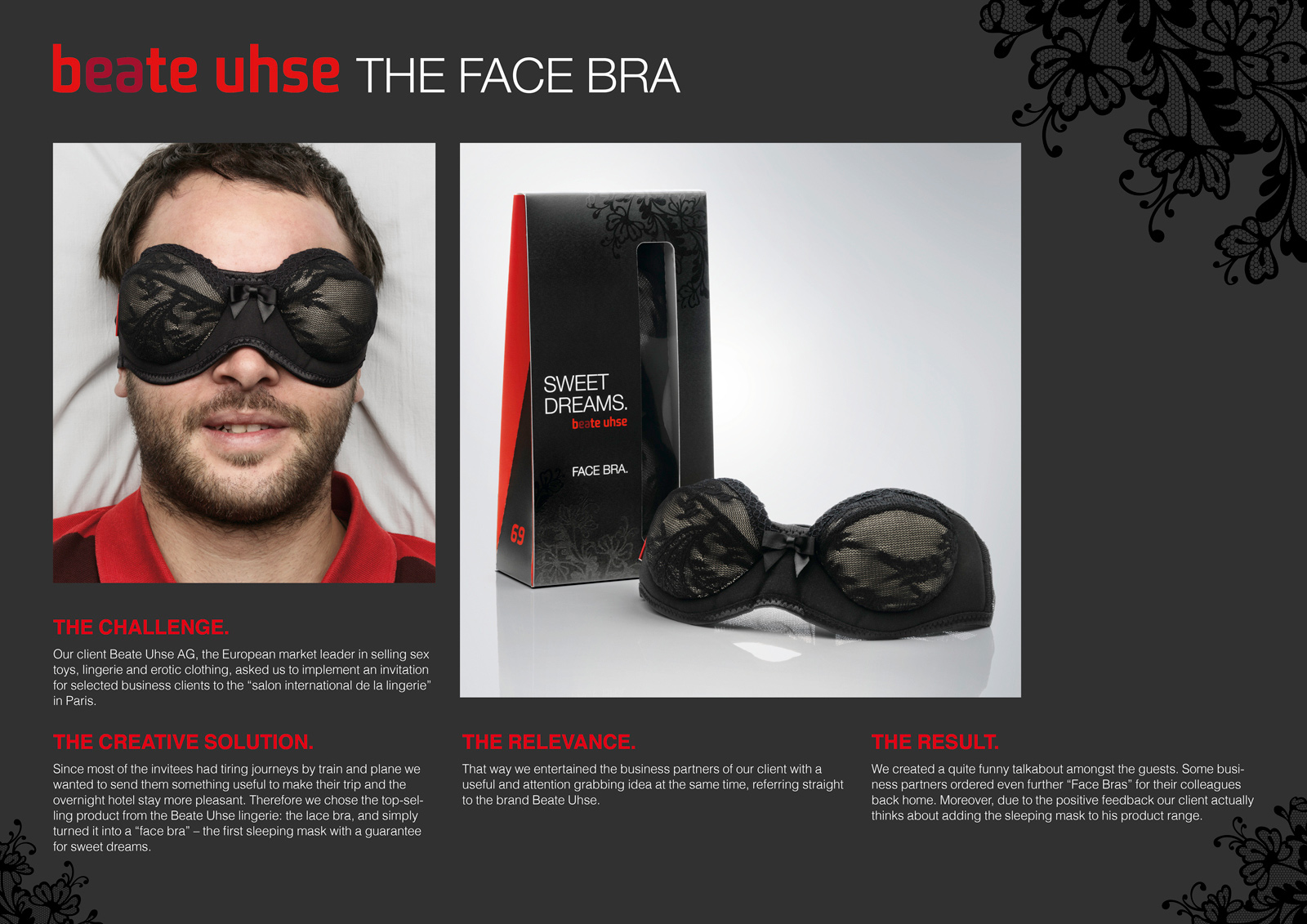
Beate Uhse: Face Bra


See the Silver and Bronze here

Become a Type Snob

All art directors and designers need to know how to work with type. I would repeat it or put it in bold for emphasis but I want you just to take my word on this one.

Knowing what to pick, how to use it and how to lay it out will make you an incredible asset in any agency.

Start becoming a type snob today.

There are a million and seven sites that feature and celebrate great type. Here are a few that I like.


Typography Inspiration & Information

Type Flirt, a collection of typography with flirty sayings.


               _______________________________________________________________


Typography Served, a gallery of curated work from creatives on Behance.


               _______________________________________________________________


I Love Typography a showcase of great typography, typefaces and type treatments.


Internships & Entry Level Positions

Looking for an internship or entry-level position? Sign up for NY Creative Interns' newsletter and check out their site for job posting, interview tips and so much more.

Featured internship:
New York Post. Fall Fashion Intern. Unpaid. The New York Post is seeking interns to assist in the Fashion Editorial department for the Fall 2012 semester. Applicants must be eligible to receive college credit in order to be considered and be available 2-3 days per week from 10:00am - 6:00pm. Duties will include assisting with photo shoots and communicating with outside PR firms regarding products and garments. Apply here.

Featured job: 
* Big Fuel. Account Coordinator. Big Fuel is a marketing company that builds brands through consumer insight. The Account Coordinator will be responsible for the day-to-day support of the Account Management team and for leading all administrative activities. He or she must be knowledgeable about both the client’s and agency’s businesses, an effective problem-solver, and adept at anticipating problems as well as recognizing opportunities. Apply here.

Here are some posts to read up on before you apply:

General 
How to Get Your First Job 
Second Job Hunting Tips
Top 40 Places to Intern 

Emailing 
Email Dos & Don'ts
The Art of Emailing 
I Won't Hire People Who Use Poor Grammar
How Formal Should Your Email Be?
Keep in Touch 

Resumes
Resumes that Win
Resume Writing Tips

Use Your Past Life 

Interviews
Interview Dos & Don'ts
Why Should Someone Hire You?
How to Show Off Without Looking Like a Showoff
What's so special about you?
Tips on Talking About YourselfMake People Remember You
Interview to the Top 
5 Internship Questions Answered
Watch Your Step at The Front Desk

Recruiters
Things Recruiters Love & Hate
Responses From a Recruiter

LinkedIn

7 Things You're Doing Wrong on Linkedin
How to Get Ignored on LinkedIn 
Do More on Linkedin


Money
How Much Are You Worth?
Starving Creative Issues

And, just putting some positivity out there -- When you do get hired, read:
Be On Time
First Day To Do List 
Get What You Want
Shyness Will Get You Nowhere
Don't Be an Asshole
Don't Annoy Your Coworkers
But Are You Ready to Work?
Don't Get a Job in Advertising


My 1st Month as A Creative

Last year, I interviewed two creatives who didn't go to portfolio school. One is an ACD copywriter now and the other, Simeon, just landed his first job, also as a copywriter. 
His first month has been interesting - to say the least - as he is learning the ins and outs of an agency. I've asked him to share some of his learnings with you.
A Few Words About My Few Days as a Mad Man
by Simeon Coker 
 
Copywriting for me is about finding the right words and putting them in the right order so that people do what you want them to do. 
In the happy place of my brain I am capable of doing this blindfolded with my hands tied behind my back. 
In reality, not so much. Thankfully, I am learning on the job. 
 With no prior copywriting experience or internships everyday is a learning experience. Here are few things that I’ve learned.

1.     If you don’t speak up you will be forgotten. I am naturally not the most talkative person. I’m more of a chimer-in a group setting. When I want work to do chiming in doesn’t cut it. Speak up or get left behind. (Read: Get What You Want and What's So Special About You?)

2.     That happy place in my brain is not always right. It sucks when that genius thing you wrote is not good enough for the client or your creative director. They are paying me to be great- usually that takes several revisions. It’s never good enough until it’s great. (Read: Dealing with Death and The Circle of Rejection.)
3.     There is no such thing as an eight-hour workday. Work is not over until it’s over. There is no fat lady that sings, just a creative director that says it’s ok to go home. I learned this the hard way one Friday when I had to cancel dinner plans because quitting time was nowhere in sight. (Read: Don't Get a Job in Advertising)


4.     I heard of the feast and the famine before but I didn’t understand it until I experienced it. I experienced two consecutive weeks of no consecutive work. The down time was painful and I had to find creative ways to create work for myself and stay busy.  I learned to appreciate the moments when I can barely breath because I’m so busy. (Read: Surviving the Feast & Famine)

5. I work to get work. I'm a junior copywriter at the bottom of the totem pole - no one knows me or what I'm capable of. If I want to be included on major assignments I will have to do some grunt work so that people know the quality of my work and know that I am reliable. Nothing in life is free. If I want to move up the ladder I will have to start by doing all of the work that no one else wants to do. (Read: But Are You Ready to Work)

How To Train Ideas

One of the benefits of portfolio school is having the time and training to concept and craft.

Every assignment is a lesson: Where do you start? How do you start? How do you say it best? How do you work with a partner? How do you present? How do you get these two executions to turn into a full-blown campaign? How do you know if this idea is good or not? How do you incorporate all that feedback? How do you recover when your best ideas weren't good enough? How do you start all over again?

Sigh.

It's a lot.

And it doesn't necessarily end once you start working. Portfolio school just helps you get better at it, quicker. So do internships. And whether you're building your book from scratch or in school, "better" and "quicker" always win.

I came across this e-book, by Ad Teaching's author, Suzanne Pope.

How to Train Ideas to Come When They Are Called: 
Notes and Advice for Young People in Advertising. 

It's a relatively quick read (37 pages) and has pictures, so if the title wasn't enough, hopefully those little facts pull you in. It covers some great points, like SCAMPER a technique I learned in school and still use. (Substitute. Simplify. Combine. Adapt. Modify. Put to other uses. Eliminate. Exaggerate. Rearrange. Reverse.) The booklet also gives examples of what's good and why, so you get a better idea of how to judge your work. (Awesome-or-Awful can also help. Hehe shameless plug.)


The title alone "How to train ideas to come when they're called" is something you all need to learn. This book is just a start.

Some days you'll be given a creative brief at 11 AM and they'll need to see concepts by 6 PM. On the same day. 

You've got to be nimble. You've got to be able to hit the ground running and take any idea or creative need and turn it into something producible in a short period of time.  


And it helps to train your brain to do that. To learn how to get past the cliches and garbage quicker and get into the good stuff. To just start churning whether or not you've had your first cup of coffee. To come up with something good - sometimes right on the spot. To start over from scratch after giving your heart, soul and unborn son's soul to ideas that were just brutally killed. 

That takes time and practice. And thick skin.  

You can read and download the book here.


Ten Editing Tips for Writers


Editing your own work can be difficult. You fall in love with sentences. You don't notice you wrote than not then. You know the elements too well so you don't realise that something may be unclear or confusing. 

But you have to do it. Sometimes your partner doesn't have time to go over your copy. Or your ACD or CD. Sometimes you have to figure it out for yourself.

So now that you've written 5 or 6 versions (you did write several drafts and options right??) and have settled on the strongest, best-written piece, it's time to edit.

Ten Editing Tips from the Tweed 

1. Read it out loud.When you hear it you may notice sentences that are too long or too clunky. Edit those sentences that don't sound right.

2. Check your spelling and grammar. Use spell check then also go through for words spell check may not get - many homophones (pored/poured), common mistakes like than/then and it's/its.  (I always have to look for British spellings that still seep out of me) 

3. Read it backward. start from the last sentence and read to the first - reading them out of context helps you notice mistakes better

Now, start going through your work with a fine tooth comb and looking at ways you can really make it stronger.


4. Kill “That.”  In most cases it doesn’t add anything but more words.
5. Change “Get.”  Get says very little. Grab (see, I could've said get here) your thesaurus and find another verb. While you’re at it, kill most iterations of “to be,”  and any variation of “there is/are." Try to keep your language active and colourful.
6. Use words that work hard for you. Or – use hardworking words.  Very, really and easy are weak throw-away words. Use verbs, adverbs and adjectives that add to your sentence.

Is there one word that means “ran quickly” or “said angrily”?
7. Don’t get too friendly with adverbs and adjectives : You can be descriptive by using descriptive language, not just adding descriptors like adverbs and adjectives. 

He wore a blue jacket isn't really telling me much.  What shade of blue? How did he wear it? How did the jacket look? Feel? Smell? 
8. Be strange. If the word or phrase sounds familiar, change it. There are clichéd ideas and phrases. Check yourself anytime anything flows too easily out of your mind – that may be because you’ve heard it before.
9. Write it again. Rewrite it. Pen it over.  There are several ways to say the same thing, explore different options to make sure you’re saying it the best way.
10. Commit sentence suicide : Strip the piece down to its barest form and then rebuild from there. Does it need that word? Go through your copy line by line and make sure everything you put in is adding something to the piece and serves a genuine purpose. If it doesn’t: delete, delete, delete.
Bonus: Be your enemy. I read this advice from a well-known CD - look at your work as if your enemy did it - what would you tell them to change?

TV Taught Me

People often ask me how I knew about advertising as a career path. No one I knew was in advertising, we didn't have guidance counselors or aptitude tests at my high school, and my parents still aren't sure exactly what I do every day.

Yet, I left high school knowing this is exactly what I wanted to do - well, not copywriting exactly, that came after freshman year when I added English as my second major and was solidified after an internship in the account management department - but when I was looking at colleges I knew that I wanted to get into a good advertising department (go Gators). 

Honestly, I think I got it from TV. 

Remember how Jamie Foxx used to make up jingles at his job? Or Darren from Bewitched? Even Tom and Lynette on Desperate Housewives all had some sort of advertising job. 

 Here's a listing of some of the standouts. 

Ad Men: 10 Movies and TV Shows About Advertising Agencies


If you're going through "Mad Men" withdrawal, you're not alone.

While the popular series is giving AMC lots of clout during talks of a high dollar takeover, new episodes of the AMC series aren't slated to hit the air until March of next year!
But while you await the return of Sterling Cooper Draper Pryce, there are plenty of past TV and movie advertising agencies to tide you over.

Here's a look back at 10 old school TV shows and movies that feature advertising agencies:
"Bosom Buddies"- 1980-1982
Agency: Livingston, Gentry & Mishkin
Yeah, Tom Hanks has come a long way. Back in the prehistoric days of his acting career, Hanks donned a wig and stuffed bra so his sitcom character, Kip Wilson, could rent in an affordable girls-only apartment house. To pay that cheap rent, Kip-slash- Buffy worked as a graphic artist at Livingston, Gentry & Mishkin ad agency. His equally lipsticked roommate, Henry, wrote copy for the agency.

"Bewitched"- 1964-1972
Agency: McMann and Tate
Even though his wife was a witch and could zap up anything she wanted, Darrin Stephens insisted on bringing home the bacon in this 1960s sitcom. Darrin was an advertising executive at the firm McMann and Tate, where he received a daily berating (and frequent threats of firing!) from micromanager boss, Larry Tate. ( You check out some of Darrin's ads here.) By the way, who was McMann, anyway?

Agencies: Roth, Kane and Donovan; Norman, Craig and Kummel; J. Walter Thompson
In this Academy Award winning movie, Ted Kramer (Dustin Hoffman) lost his job as an advertising exec at the wrong time'"just as his estranged wife decided to sue him for custody of their son. Two ad jobs (and two hefty pay cuts!) later, Ted may have been working his way down the ladder of success-- but winning his son's heart was priceless.

"Melrose Place"- 1992-1999
Agencies: D& D Advertising; Amanda Woodward Advertising
No one does advertising quite like Heather Locklear! In the 1990s she played bad girl advertising exec Amanda Woodward on the popular nighttime soap, "Melrose Place," giving new meaning to the phrase, "Sex sells."

"Who's The Boss"- 1984- 1992
Agencies: Wallace and McQuade; The Bower Agency
In this sitcom, high powered advertising exec Angela Bower (Judith Light ) hired a hunky male housekeeper (Tony Danza) to do her dirty work -- and he even helped her out by starring in a commercial for soap in one episode. Too bad he got a rash from the product!

"Mr. Mom"- 1983
Agency: Richardson Advertising Agency
When Jack Butler (Michael Keaton) lost his engineering job in this John Hughes classic, his stay at home wife ( Teri Garr) beat him back into the job market when she landed a job at an advertising agency headed by a smarmy executive. But her mommy experience helped her to come up with fam-friendly ad campaigns like "Schooner Tuna: The tuna with a heart."

Agency: Kingston, Cohen & Vanderpool
Comedian Don Rickles starred as a stressed out advertising account executive in this one season wonder (okay, 13-episode wonder) that featured a pre-"Happy days" Erin Moran as his young daughter. The show tanked, so luckily this hockey puck had his stand up career to fall back on!

Agency: Bedford Advertising Agency
Queue up the Dorothy Hamill wedge haircuts! This short lived ABC sitcom (if you blinked in 1977 you missed it!) starred Bess Armstrong and Lynnie Greene as two New York ad agency employees who shared an apartment.

Agency: Sloane Curtis Agency
In this movie, Mel Gibson starred as a chauvinistic ad man who, after a bathtub accident, could suddenly hear women's thoughts. This made for some chick-friendly ad campaigns-- and Sensitive Guy was born.

"Full House"- 1987-1995
Agency: J J Creative Services
Sure, Jesse and Joey (John Stamos and Dave Coulier) had other careers on this long running series (Jesse was an exterminator while Joey was a stand up comedian'" and these two clowns even hosted a radio show together) but when they finally found their niche it was for commercial jingle writing. They started their own agency just in time, because let's face it, were the Beach Boys really going to let Jesse ride on their coat tails forever?